Table of Contents
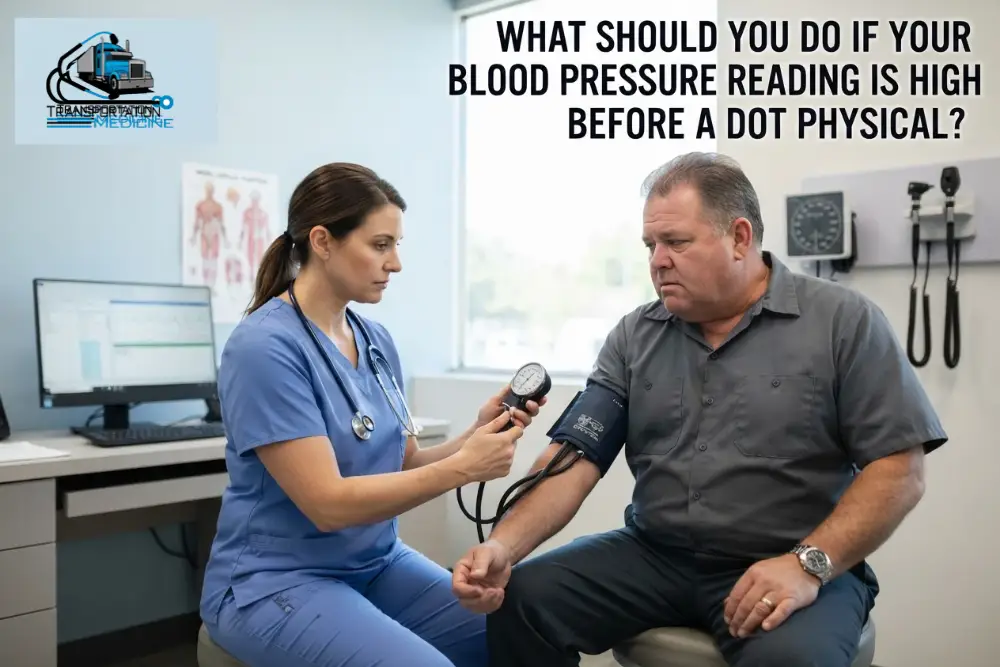
Your DOT physical is soon, and you have taken your blood pressure prior to the visit. The number is higher than you expected. Now you’re wondering whether you’ll pass or lose your DOT medical card.
Having hypertension does not necessarily mean you will be automatically disqualified. Your medical examiners will be aware of your blood pressure measurements, your medical history, the drugs you may be taking, and the likelihood that it could affect your driving capability.
Understanding the dot physical blood pressure limits will allow you to get prepared and understand what to expect from this procedure. The January 2024 Medical Examiner’s Handbook remains the latest edition listed by FMCSA as of November 4, 2026. Here is what its current hypertension guidance says in case of a high reading.
Why Does Blood Pressure Matter During a DOT Physical?
The importance of checking blood pressure is due to the fact that uncontrolled high blood pressure poses a risk of getting various illnesses like heart disease and stroke. The illnesses pose the danger of disqualifying someone from driving the commercial vehicle.
According to 49 CFR 391.41(b)(6), a commercial motor vehicle operator must have no current clinical diagnosis of high blood pressure likely to interfere with their ability to operate a commercial motor vehicle safely.
The medical examiners review your blood pressure based on:
- The results of your blood pressure and health history.
- Control of your high blood pressure.
- Complications related to heart, kidneys and blood vessels.
- The side effects of your medication.
There isn’t one universal number in the regulation. Rather, FMCSA’s Medical Advisory Criteria rely on hypertension stages for decision-making regarding certification.
What Should You Do First If Your Blood Pressure Is High Before Your DOT Physical?
In case your readings are elevated, follow these recommendations prior to your appointment.
1. Don’t Panic Because of One Elevated Reading
Blood pressure fluctuates throughout the day. The stress of getting ready for an appointment, as well as smoking, caffeine, and physical activity may affect your blood pressure reading.
One high measurement doesn’t prove you have hypertension. FMCSA advises medical examiners to confirm an elevated finding with follow up measurements.
2. Check Your Blood Pressure Again Correctly
A bad measurement can give you a misleading result. When you check at home, try this:
- Skip caffeine, smoking, and exercise for at least 30 minutes beforehand.
- Sit quietly for at least five minutes.
- Keep your back supported and your feet flat on the floor.
- Put the cuff on your bare upper arm.
- Rest your arm at heart level.
- Take two readings, one minute apart.
Use a properly sized automatic upper arm monitor, and don’t talk or scroll on your phone while you measure.
These steps follow the American Heart Association’s home blood pressure monitoring guidance.
American Heart Association
3. Keep a Record of Your Readings
Write down your readings over several days, with the date and time of each. That gives your healthcare provider a clearer picture. Is your pressure consistently high, or was one reading just off?
Bring the log to your DOT physical. Home readings don’t replace the measurements taken during the exam, though.
4. Speak With Your Healthcare Provider
In case your readings remain high, then it would be wise to consider making an appointment with your doctor. Talk about your medical history, medications and any symptoms that you have had.
This will help you know whether you require any treatment or just an adjustment to your existing one. Please don’t change your medication just to get ready for the exam.
What Do the DOT Physical Blood Pressure Limits Mean for Your Medical Card?
FMCSA uses three hypertension stages to guide medical examiners. The stages are based on the systolic (upper) or diastolic (lower) number.
| Stage | Blood pressure reading | General certification guidance |
| Stage 1 | 140 to 159 systolic and/or 90 to 99 diastolic | May qualify for a one year certificate. |
| Stage 2 | 160 to 179 systolic and/or 100 to 109 diastolic | May get a one time three month certificate to start or adjust treatment. |
| Stage 3 | At or above 180 systolic and/or 110 diastolic | Not qualified until blood pressure drops to 140/90 or below and treatment is well tolerated. |
Here’s how each stage plays out:
Stage 1: At the first finding, a driver may qualify for a one year certificate. Annual exams are recommended after that, with a target of 140/90 or below. If a later exam shows a reading still above 140/90 but below 160/100, the driver may get a one time three month certificate to reach the target.
Stage 2: A driver may get a one time three month certificate to start or adjust antihypertensive treatment. If the treatment is well tolerated and blood pressure reaches 140/90 or below, a one year certificate may be issued.
Stage 3: The driver can’t qualify, even for a short period, until blood pressure reaches 140/90 or below and treatment is well tolerated. Once those conditions are met, a six month certificate may be considered, followed by six month exams.
Annual certification is also recommended if the medical examiner does not know the severity of hypertension before treatment.
Keep in mind these are the FMCSA Medical Advisory Criteria, not guaranteed outcomes. The examiner looks at the driver’s whole medical picture.
The DOT medical card 1 year vs 2 year blood pressure difference depends on your readings. Drivers below 140/90 may qualify for two years, while treated hypertension generally requires annual certification.

Questions About Your DOT Medical Card?
Blood pressure and medication can affect your certification period. Dr. Weinberg at Transportation Medicine helps commercial drivers understand their medical eligibility and certification requirements.
Get clarity on your DOT medical requirements. Connect with Dr. Weinberg at Transportation Medicine.
Can You Still Pass a DOT Physical If Your Blood Pressure Is High?
Yes, depending on your reading and your overall health. High blood pressure doesn’t automatically mean permanent disqualification.
For example:
- Stage 1: You may qualify for a one year certificate.
- Stage 2: You may get a one time three month certificate to start or adjust treatment.
- Stage 3: You’ll need to bring your blood pressure down to 140/90 or below and tolerate treatment before you can qualify.
So, can you fail a DOT physical for high blood pressure? Yes. A Stage 3 reading, or a condition that raises a safety concern, can prevent certification. That isn’t necessarily the end, though. Once you meet the medical requirements, you can qualify again.
Should You Take Blood Pressure Medication Before a DOT Physical?
Take your medicine if your doctor has prescribed it for you. You should not miss any doses or take extra, nor change your prescription in order to affect your readings.
Regarding the DOT physical blood pressure medication, the doctor will look into two main questions: whether your medicine controls your high blood pressure and whether you tolerate it well.
Certain medicines may lead to the following:
- Dizziness or lightheadedness.
- Drowsiness.
- Fatigue.
- Fainting.
Mention all the names of the drugs, the dosages if there is any change, and any side effects of the drugs you take. It doesn’t matter that you are taking some medication, because this doesn’t imply disqualification.
What Medical Documentation Do You Need for Your DOT Physical If You Have High Blood Pressure?
If you have been diagnosed with high blood pressure, provide the relevant medical documentation to help your examiner understand your case better.
A list of documents includes:
- Recent home blood pressure readings.
- Current medication names and dosages.
- Recent physician notes or medical records.
- Details of any medication changes.
- Information about side effects.
- Specialist reports, if you have them.
Not everyone needs all of these. The examiner may ask for more depending on your medical history.
If you’re researching CDL high blood pressure Florida requirements, start by figuring out whether you operate in interstate or intrastate commerce. Under the 2026 Florida Statutes, Section 316.302(1)(a), commercial drivers operating in interstate commerce are subject to the listed federal safety regulations.
Under Section 316.302(1)(b), intrastate commercial drivers are generally subject to Parts 382–386 and 390–397 as those rules existed on December 31, 2023, subject to the section’s exceptions. Check your driving category and the requirements that apply to you with the Florida Highway Safety and Motor Vehicles.
What Happens If Your Blood Pressure Is Still High During the DOT Examination?
In case your reading is elevated during the examination, the medical examiner needs to confirm that, instead of just going by one reading.
As per the FMCSA Medical Examiner’s Handbook (2024 Edition) and its Medical Advisory Criteria:
- Readings higher than 139/89 will need to be checked again during the examination process.
- Blood pressure reading being elevated will require confirmation from at least two more readings.
- Extra medical information or tests will be asked for, if needed.
The readings obtained during the DOT physical examination are relied upon for the decision to grant certification. The readings at home are good for medical history, but not for the examinations.
Based on the readings, the examiner may issue you a shorter medical certificate, a one time certificate of three months’ duration, or deny you certification until your blood pressure is under control.
How Can Commercial Drivers Manage Blood Pressure Before Their Next DOT Physical?
A lot of drivers ask how to lower blood pressure before DOT physical. The honest answer is that there’s no safe way to reliably fix consistently high blood pressure overnight. Long term management is what actually works.
Try the following with your healthcare practitioner:
- Take medications according to your doctor’s advice.
- Monitor your blood pressure from time to time.
- Reduce salt intake in your diet.
- Do exercise as per your doctor’s recommendation.
- Maintain an optimal body weight.
- Sleep properly.
- Don’t smoke and minimize drinking of alcohol.
- Keep up with regular medical follow ups.
All these practices will help you manage your blood pressure, but they won’t take the place of your medical treatment.
When Should a High Blood Pressure Reading Require Immediate Medical Attention?
A very high reading isn’t just a DOT physical problem.
In case your blood pressure is above 180/120 mmHg, allow some time for about a minute and then take the measurement once more. Should the reading remain high, immediately reach out to a healthcare provider.
In case you are suffering from chest pain, breathlessness, back pain, numbness, weakness, blurred vision, or trouble talking, then you should dial 911 because this may mean a hypertensive emergency.
Be Prepared for Your DOT Physical Examination
Having high blood pressure doesn’t automatically prevent you from getting a DOT medical card. Understanding the DOT physical blood pressure requirements and following your prescribed treatment can help you prepare for the examination.
Dr. Weinberg at Transportation Medicine assists commercial drivers in understanding DOT medical certification requirements and dealing with health issues influencing their qualifications.
For guidance on your DOT physical and blood pressure concerns, contact Dr. Weinberg:
Email: aweinberg@medavex.org
Call: (727) 648-2402