Table of Contents
Taking antidepressants and getting ready for a DOT physical can make you wonder about your commercial driver’s license (CDL). Will your medication affect whether you can drive? Will you need a letter from your doctor?
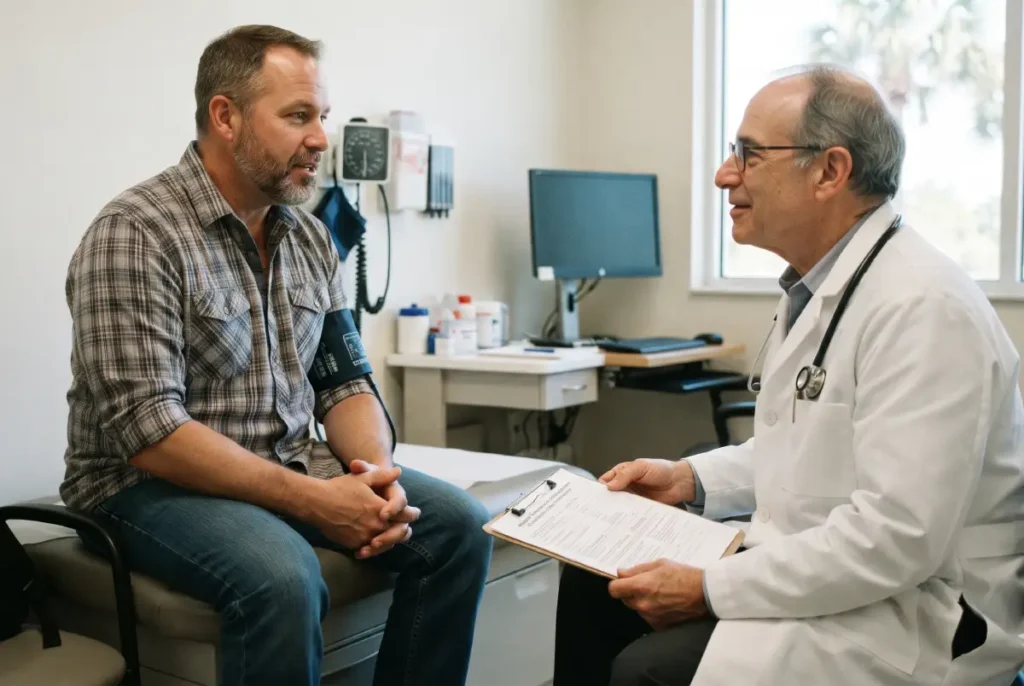
Using anti-depressant medication does not automatically bar one from commercial driving. When undergoing the DOT physical antidepressants assessment the examining physician will review the disorder to be addressed, effectiveness of the drug therapy, its side effects, and your ability to drive safely. It is advisable to bring all your medical records when going for the examination.
Can You Pass a DOT Physical While Taking Antidepressants?
Yes, it may be possible. The FMCSA’s Medical Examiner’s Handbook explains that a mental health diagnosis alone doesn’t automatically keep a driver from qualifying.
The examiner wants to know whether your symptoms are under control, whether your treatment is working, and whether your medication affects your alertness or your ability to drive.
If you’re worried about antidepressants and a DOT medical card, keep in mind that medication is only one piece of the picture. The examiner looks at your whole situation before making the final decision.
How Different Types of Antidepressants May Affect DOT Certification
All antidepressants do not have equal impacts on people. Dose and side effects of medication are among factors to consider in determining whether or not medication will impair your safe driving ability.
Medication type | Examples of medication | Impairing side effects |
First-generation antidepressants | Amitriptyline and others in the tricyclic family | Sleepiness, dizziness, impaired alertness |
Second-generation antidepressants | SSRIs like sertraline; SNRIs like venlafaxine | Individual side effects and reaction to treatment |
First-Generation Antidepressants
First-generation antidepressants, particularly the tricyclic antidepressants, might have certain side effects that can be problematic for driving.
In the examination of the effect of antidepressants on commercial truck driving, they examine the specific medication, the specific dose, and the individual response.
Second-Generation Antidepressants
According to FMCSA guidance, SSRIs and SNRIs generally cause fewer side effects than some older antidepressants. Even so, people respond to them differently.
If you’re getting ready for an SSRI medication DOT physical, be prepared to explain how long you’ve been on the medicine, whether your dose has changed, and whether you’ve noticed any side effects. No medication category guarantees approval or disqualification.
What DOT Medical Examiners Evaluate When You Take Antidepressants
The examiner looks at your health and your treatment to decide whether you can safely operate a commercial vehicle.
The Condition Being Treated
Depression may influence your sleep, energy levels, focus, and judgment capabilities. The examiner will assess the severity of the symptoms and their possible negative influence on driving ability.
DOT physical for drivers who have depression may not result in disqualification automatically. It depends on the current state of the symptoms, your medical history, and your response to treatment.
Medication Dosage and Stability of the Treatment
The examiner may ask about the duration of the medication treatment, its stability, and how effective the treatment is.
If you are concerned with antidepressants and DOT medical card, you should know that recent changes in your medications do not mean disqualification. It may lead to further questioning on possible appearance of new side effects and other concerns. There is no general waiting period after starting taking any antidepressant.
Potential Side Effects That Could Affect Driving
Possible side effects include:
- Sleepiness or drowsiness
- Dizziness or reduced alertness
- Difficulty concentrating
- Changes in coordination or reaction time
- Interactions with Other Medications or Alcohol
As the National Highway Traffic Safety Administration cautions, some medications can impact driving. In addition, the guidelines provided by FMCSA for mental health medications should take into account not only the disease itself but also the side effects of the medication.
Tell your doctor about any side effects that you have suffered from and do not change your therapy schedule without the advice of the doctor.
What Documents Should You Present at the DOT Physical Exam in Florida?
In order to provide the physician with information on your treatment, you should prepare the following documents:
- A current medication list and dosages.
- Relevant medical records or a treatment summary.
- Your prescribing clinician’s contact information.
- Details about recent medication changes or side effects.
- A doctor’s letter if the examiner asks for one.
DOT physical mental health requirements revolve around the issue of whether your condition or treatment is likely to affect your driving ability safely. The health qualifications expected of commercial drivers are listed in federal regulations 49 CFR § 391.41
Need Help Preparing for Your DOT Physical?
Questions about antidepressants and your CDL can make your upcoming examination feel stressful. Transportation Medicine, led by Dr. Auren Weinberg, provides DOT physical examinations for commercial drivers in Clearwater and West Palm Beach, Florida.
Call (727) 648-2402 or email aweinberg@medavex.org to learn more about scheduling your examination.
What Will Happen If the Medical Examiner Requires Further Clarification?
Further inquiries may be made by the examiner either through your medical documents or from your prescriber.
A DOT medical examiner medication review can cover your dose, treatment results, side effects, and the condition being treated. The FMCSA’s MCSA-5895 medication form is optional. Examiners can use it to request information from a treating clinician.
The examiner may accept your certificate, request additional information, or determine that you are not qualified. The letter from your physician is a useful explanation of your treatment, but it doesn’t ensure the certificate acceptance.
Tips to Prepare for a DOT Physical Exam while on Antidepressants
Only a few simple measures will help you:
- Take your antidepressant according to the prescription. Don’t make any adjustments in the treatment because of the examination.
- Provide your medication list. Dosage and all other medications should be listed there.
- Tell about the side effects. You can ask your health care provider if your treatment can have an impact on alertness or response time.
- Inform the examiner about changes. Discuss any modifications in dosage or the emergence of side effects.
It may take some additional time to collect additional documents.
For drivers with questions about CDL medical certification mental health medication, the main concern is whether the condition and treatment affect safe driving. Interstate drivers can use the FMCSA National Registry to find a listed medical examiner.
Schedule Your DOT Physical in Florida
Getting ready for your next DOT physical? Transportation Medicine, led by Dr. Auren Weinberg, provides DOT physical examinations for commercial drivers in Clearwater and West Palm Beach, Florida.
Can you take antidepressants with a CDL? This is dependent on your individual medical condition and medications that you might be taking. Dr. Weinberg is available for your evaluation at your examination.
In order to schedule your appointment, please contact us by phone at (727) 648-2402 or e-mail us at aweinberg@medavex.org.
FAQs - DOT Physical Antidepressants
Are you able to take antidepressants while holding a CDL license?
Yes, potentially. The examiner considers your condition, your medication, and any side effects that could affect driving.
Do you need a doctor’s letter?
Does changing antidepressants have any effect on the DOT physical?
Yes. There might be questions on whether you are experiencing any side effects or whether your medication is effective.